How to Shop for Dresses Online: Fit, Fabric & Returns
Updated: Oct 24
Shopping for a dress online is easier when you treat the product page like a fitting room checklist. A polished photograph can make almost any garment look appealing, but the details that decide whether you keep it are usually smaller: garment measurements, fabric stretch, lining, model height, closure, delivery timing, and return rules. You do not need to predict exactly how every dress will look on your body. You need to reduce the number of unknowns before you pay.
1. Measure yourself before opening the size chart
Measure your bust at the fullest point, your natural waist at its narrowest point, and your hips at the fullest point. Keep the tape level and comfortably snug rather than pulling it tight. If the dress is fitted through the shoulders or has a defined waist, note your shoulder width and torso length too. Measure in the undergarments you expect to wear with the dress. If you are shopping for a maxi or midi length, measure from the shoulder or waist to the point where you want the hem to fall.
Write the measurements down and update them when your body or preferred fit changes. A size you bought last year may not correspond to the same measurements today, and size labels vary between brands. Do not rely on a single number such as your usual size. The goal is to compare your measurements with the exact chart attached to the dress you are considering.
2. Compare body measurements with garment measurements
A size chart can show body measurements, garment measurements, or both. Those numbers are not interchangeable. A garment measurement includes ease: the extra room built into the design so you can sit, move, and breathe. A fitted woven dress may have very little ease, while a relaxed knit dress may have more. If the retailer provides garment measurements, compare them with a dress you already own that fits the way you like. Measure it flat and follow the retailer's instructions for where each measurement is taken.
Pay special attention to the bust, waist, hip, and length. A dress can fit at the bust but pull across the hips, or fit the waist but feel too short when you sit. If the product has a defined waist seam, check where that seam will sit on your torso. If it has a slit, wrap front, or button closure, look for photos that show how the garment behaves while standing and moving.
3. Read the fabric and construction details
Fabric composition helps you predict feel and care, but it does not tell the whole story. A cotton dress may feel crisp or soft depending on the weave and finish. A polyester blend can drape smoothly, resist wrinkles, or feel warm depending on its weight and construction. Linen often creases; stretch jersey may cling; satin can show tension lines. Look for the percentage of each fiber, whether the dress is lined, and whether the fabric has stretch.
Check the product details for closures, pockets, lining, care instructions, and transparency notes. A light-colored dress may need a lining or suitable undergarments. A dress with a hidden zipper may be harder to put on if the fit is very close. A knit dress may stretch with wear. If the product page does not explain an important detail, treat that as uncertainty rather than assuming the garment will match the photograph.

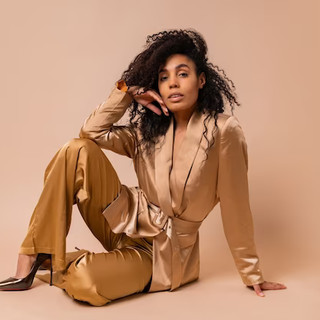
Photo by Cristian Rojas via Pexels; Pexels License. View the original Pexels photo; used under the Pexels License, which permits free commercial use. This is an illustrative product/category image, not an official brand product photograph.
4. Use product photos to answer specific questions
Look for front, back, side, and close-up photographs. A single front-facing model image rarely shows whether a dress is sheer, whether the back is low, or how the skirt moves. If the retailer includes a video, use it to assess drape and movement rather than treating it as a perfect fit preview. Check the model's height, the size she wears, and whether the product page gives her measurements. Those details help you understand why the hem may fall differently on you.
Compare the studio photo with customer photos when available. Lighting can change how a color appears, and a retouched image may hide texture or seams. Zoom in on the neckline, armhole, waist seam, zipper, hem, and lining. If a dress looks smooth in the main photo but the close-up shows a very thin fabric, plan your undergarments and expectations accordingly.
5. Read reviews for evidence, not just star ratings
A high rating is useful, but the written reviews are often more informative. Search for comments from shoppers with a similar height, bust, waist, or hip measurement. Look for repeated observations: runs small, loose at the waist, short in the torso, thin lining, scratchy fabric, or color different from the photograph. One review may reflect an unusual fit preference; a pattern across several recent reviews is more useful.
Check whether the reviews refer to the exact color and style you are considering. Retailers sometimes group reviews across colors or versions that use different fabrics. Read both positive and critical reviews. If several people mention that a zipper sticks or the lining twists, treat that as a real buying risk even if the overall rating is high.
6. Check delivery timing and return rules before checkout
If you need the dress for an event, count backward from the date you must wear it. Include processing time, shipping time, a possible exchange, and the time required for a refund. A delivery estimate is not the same as a guaranteed arrival date. If the event is close, choose a retailer with a reliable delivery option or buy from a store where you can try the item in person.
Read the return policy for the exact item. Check the return window, whether the clock starts at shipment or delivery, the cost of return shipping, whether exchanges are free, and whether Final Sale or special-occasion items are excluded. Some retailers require tags and original packaging; some allow store credit but not a refund after a certain date. Keep the order confirmation and do not remove tags until you are sure the fit works.
7. Decide what to do when you are between sizes
There is no universal rule to size up or down. For a non-stretch woven dress that is fitted at the bust or hips, the larger size may be easier to tailor than a smaller size that pulls. For a loose knit or relaxed shift, the smaller size may give a cleaner line if the garment is designed to have room. Use garment measurements and reviews to make the decision. If the size difference is large or the fabric has little give, consider a different style rather than forcing a poor fit.
Your pre-checkout checklist
Before placing the order, confirm five things: your current body measurements match the size chart; the garment measurements provide enough ease; the fabric, lining, and care instructions suit the occasion; the photos and reviews answer your main fit questions; and the delivery and return terms fit your timeline. Save the product page or take a screenshot of the size and return information in case the listing changes.
If you are still choosing where to buy, start with our best online dress stores comparison. For a specific event, see the fall wedding guest outfit guide or our guide to business-casual dresses. If you have already chosen a wrap silhouette, the wrap dress styling guide can help with proportions and layering.
Frequently asked questions
How do I measure myself for an online dress?
Measure bust, natural waist, and hips with a level tape, then compare those numbers with the exact brand size chart. For midi and maxi dresses, also check the garment length and model height.
Should I size up when buying a dress online?
Only when the garment measurements, fabric, and reviews suggest the smaller size will pull. A fitted woven dress may need more room; a relaxed knit may not. Use measurements instead of a blanket rule.
How can I tell whether an online dress is see-through?
Look for lining details, fabric weight, close-up photos, and reviews that mention transparency. Light colors and thin fabrics may need different undergarments or a slip.
What should I check in a dress return policy?
Check the return window, start date, return shipping fee, refund method, exchange rules, Final Sale exclusions, and whether tags must remain attached. Confirm the terms for the exact item.
What if I need the dress for an event next week?
Choose a retailer with a realistic delivery estimate or local pickup, avoid uncertain preorders, and leave time for an exchange. If the deadline is fixed, a nearby store with in-person try-on may be lower risk.


Comments