How to Wear a Tie as a Woman: 7 Outfit Ideas Beyond the Office

A tie can make an outfit feel sharp, playful, borrowed-from-the-boys or deliberately unexpected. It does not have to signal a corporate dress code. In Fall 2026 street-style coverage, the necktie appeared with windbreakers, skirts, tailored separates and more relaxed combinations, showing how easily the accessory can move between formal and casual clothes. The trick is to decide what role the tie should play before building the rest of the outfit around it.
This guide is for women who want to wear a traditional necktie without looking as if they are heading to a uniform fitting. The suggestions focus on proportion, texture and contrast. You can use a tie you already own, borrow one from a family member or choose a new one with a width and fabric that suit your wardrobe. The point is to make it feel like your accessory, not a costume prop.
Why the tie is moving beyond corporate dressing
The necktie has a strong association with menswear and formal uniforms, which is exactly why it creates contrast in a modern outfit. A crisp shirt and tie can look classic, but a tie with a soft skirt, oversized jacket or technical outer layer changes the message. Marie Claire’s Fall 2026 New York Fashion Week street-style report highlighted ties worn with a windbreaker and tulle skirt as well as with suede tailoring. Those combinations show that the accessory can be used as a styling accent rather than a symbol of office formality.
The trend also fits a wider interest in borrowing familiar menswear details and changing their proportions. A tie can be worn neatly, loosely, tucked into knitwear or allowed to hang over a simple top. Each approach changes how formal the outfit feels. You do not need to buy a full suit to try it; one tie can work with pieces you already own if the shirt, neckline and length are chosen thoughtfully.
Pick the tie before you pick the shirt
Width is the first decision. A narrow tie feels sharper and more graphic, while a wider traditional tie creates a stronger menswear reference. If you are new to the look, a medium-width tie is usually easier to balance with a standard shirt collar and blazer. The tie should not overwhelm a very small collar or disappear beneath a wide lapel. Compare the tie with the jacket and shirt together, not in isolation.
Pattern and fabric matter too. A solid dark tie is the easiest starting point because it adds a clean vertical line. Stripes bring a preppy or collegiate mood; small patterns can add texture without dominating. Silk and smooth woven fabrics look more formal, while knit or textured ties feel relaxed. Leather ties are more directional and can become the main statement, so keep the rest of the outfit simple if you choose one.
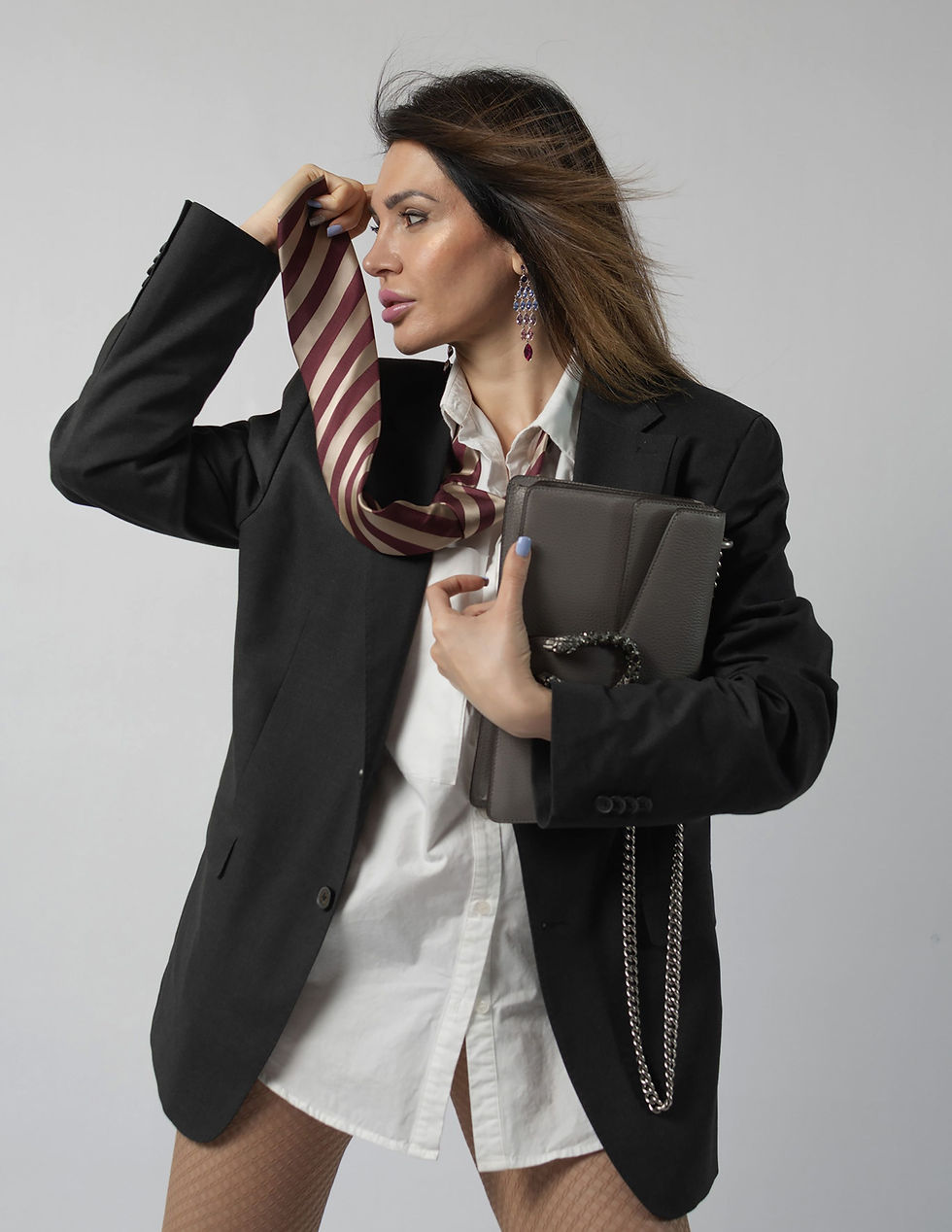
Seven ways to style a tie without looking like you are in uniform
A crisp shirt with straight trousers
Start with a white or pale-blue button-down, straight trousers and a medium-width tie. Keep the knot neat but not excessively tight, and leave the collar comfortable. A simple leather belt and clean loafers make the outfit feel intentional. To soften it, roll the sleeves or choose trousers with a relaxed fit. This is the closest version to classic tailoring, so it is a useful first experiment.
An oversized blazer with jeans
A relaxed blazer makes the tie feel less corporate. Wear it over a crisp shirt with straight or wide-leg jeans, then keep the shoes simple. The blazer can be slightly oversized, but the shoulder should still look deliberate. A tie in a solid color or restrained stripe is enough; adding a pocket square, statement necklace and large earrings may crowd the upper half. The balance comes from mixing one formal detail with everyday denim.
A sweater vest over a shirt
A sweater vest creates a natural frame for a tie because the shirt collar and knot remain visible while the body of the tie can be partially covered. Choose a vest with enough room at the neck so the knot does not bunch. A fine-gauge knit feels polished; a looser vest feels more casual. This combination works well with tailored trousers, a pleated skirt or dark denim, depending on the mood you want.
A leather jacket and a narrow tie
A narrow tie under a leather jacket creates a strong contrast between polished neckwear and a tougher outer layer. Use a plain shirt and let the tie sit straight, then keep the jacket open enough that the tie remains visible. A dark palette works well, but a pale shirt can break it up. Avoid adding several other edgy accessories; the jacket and tie already establish the look.
A skirt and a relaxed shirt
Pair a tie with a midi skirt or a tailored mini skirt when you want the menswear detail to feel unexpected. A simple shirt gives the tie structure, while the skirt changes the silhouette. If the skirt has volume or a strong print, choose a plain tie. If the skirt is minimal, a striped or textured tie can add interest. The outfit works because the upper and lower halves do not repeat the same message.
A tie tucked under a knit layer
A tie can be worn under a sweater, cardigan or sleeveless knit so only part of it is visible. This is a subtle way to try the trend without making the tie the entire focus. Make sure the collar and knot lie flat before adding the knit, and avoid a thick knot that creates a lump at the neckline. A small visible section can be enough to signal the styling idea.
A softer evening look with a fluid shirt
For an evening outfit, a tie can be worn with a fluid blouse or a slightly sheer layer, provided the fabric is not so delicate that the tie hardware or knot pulls it out of shape. Keep the tie loose and the rest of the outfit simple. This is a more directional interpretation, so it works best when you are comfortable with the contrast. If the tie is the statement, let the jewelry and bag stay understated.
The knot, collar and length need to work together
A small, tidy knot often suits a narrow tie and a smaller collar, while a fuller knot needs more collar space. The knot should sit comfortably at the base of the neck; it should not pull the shirt collar tight or make the neck look crowded. If the shirt has a very wide spread collar, a narrow tie can look lost. If the collar is tiny, a wide tie can dominate it. Try the combination in a mirror before leaving the house.
Length is easy to overlook. A traditional tie is often styled so the tip reaches around the waistband or belt area, but fashion styling can be more relaxed. A shorter tie can feel playful; a longer one can create a vertical line. Either way, decide where the tip should land in relation to the trousers or skirt. If the tie is partly tucked into a vest or knit, make sure it stays there naturally and does not keep slipping out.
Keep the outfit balanced
If the tie is patterned, simplify the shirt and jacket so the pattern remains readable.
If the tie is narrow, avoid pairing it with an extremely wide collar unless the contrast is intentional.
If the tie is worn loosely, keep the rest of the outfit neat enough that the look feels deliberate.
If you add a skirt or a statement jacket, use the tie as the bridge between the two rather than adding another competing focal point.
If you are wearing a tie for the first time, start with a familiar shirt and trousers before experimenting with sheer layers or unusual proportions.
When the tie does not help the outfit
A tie is not automatically stylish because it is unexpected. If it fights with the collar, disappears under a jacket or makes the outfit feel like a themed costume, simplify the combination. It may also be the wrong accessory for a very relaxed T-shirt look unless you are deliberately using contrast. The goal is not to force a tie into every wardrobe; it is to use it when the vertical line and tailored reference add something to the outfit.
If you are building a more formal casual wardrobe, Wearandi’s business casual blazer guide covers how to choose a jacket that works across different settings. For a broader framework that helps decide which trends feel personal rather than obligatory, see our personal style guide.
Questions about wearing a tie
Can women wear traditional men’s ties?
Yes. A traditional tie can work with women’s shirts, blazers, knitwear and skirts. Focus on width, length and collar proportions rather than the department it was sold in.
Should the tie be tight or loose?
Both can work. A neat knot feels more tailored; a looser knot feels relaxed. Choose the approach that suits the outfit and keeps the collar comfortable.
Can a tie be worn with a skirt?
Yes. A simple shirt and skirt create a useful contrast with a tie. Keep the pattern and accessories restrained so the combination feels cohesive.
Trend reference and further reading
Marie Claire’s Fall 2026 New York Fashion Week necktie report documents the accessory moving beyond conventional office styling. For jacket proportions and a more classic base, read Wearandi’s business casual blazer guide.


Comments