Women's Suit Fit Guide: How a Blazer and Trousers Should Fit
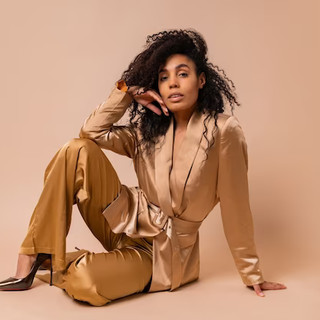
A good suit should look intentional before you think about the label inside it. The shoulder line should sit cleanly, the jacket should close without strain, and the trousers should hang without constant pulling or readjusting. Women's suiting is sold in many cuts: cropped, longline, single-breasted, double-breasted, wide-leg, tapered and skirt-suit proportions. The useful question is not whether a suit is slim or relaxed. It is whether its shape works with your body, the clothes underneath and the way you need to move.
Use this women's suit fit guide as a fitting-room test rather than a rigid measurement chart. Buy the jacket for the parts that are difficult to alter, then assess the trousers separately. It is normal to need a different size in the top and bottom, and a small alteration can make an affordable suit look far more considered than a more expensive one that never quite sits right.
The 90-second suit fit audit
Before looking at the color or checking the price, stand naturally in front of a mirror and look at the suit from the front, side and back. Button the jacket if it is designed to close, then sit, reach forward and walk a few steps. The fabric should follow your shape without being stretched tight or hanging in excess folds. A suit that only looks good when you stand perfectly still is not a practical work wardrobe investment.
Shoulders: the seam or shoulder pad should finish where the shoulder begins to slope into the arm, unless the cut is deliberately oversized.
Bust and waist: the front should close without an X-shaped pull at the button or a gap that opens when you move.
Back: the jacket should lie smoothly rather than forming strong horizontal or diagonal drag lines.
Trousers: the waistband should stay in place, the pockets should not pull open, and the seat should drape without tension.
Movement: you should be able to sit, reach and take a full stride without the jacket riding up or the skirt or trousers restricting you.
Start with the jacket: shoulders, bust and button stance
Shoulders are the hardest part to rescue
The shoulder seam is the first checkpoint because changing it is usually more involved than shortening a sleeve or taking in a waist. On a conventional tailored jacket, the seam should meet the edge of your natural shoulder. If it sits too far out, the sleeve can collapse and the whole jacket looks borrowed. If it sits too far in, the sleeve head may wrinkle and your arms can feel constrained. An intentionally extended shoulder is different: it should look designed into the garment, not like a jacket that is simply too large.
The bust should have room without gaping
Close the jacket and check the area around the bust, lapels and button. Strong diagonal creases that point toward the fastening usually mean the jacket is too tight through the chest or the button stance is not working for your proportions. If the front pulls open between buttons, do not assume that a larger size everywhere is the only answer. Compare another cut, a different button position or a style with more room through the bust. The lapels should lie flat, and the neckline should not lift away from the body when you move.
Sleeves, jacket length and what you wear underneath
Sleeve length is one of the easier adjustments, but check it with the shirt or knit you expect to wear. A traditional sleeve often finishes around the wrist bone; a little cuff can show if the outfit calls for it. The sleeve should not twist around your arm or bunch heavily at the elbow. Jacket length is more flexible. A shorter jacket can work with high-rise trousers and a defined waist, while a longer cut may balance a skirt or a wider trouser leg. Neither length is automatically more flattering; the proportions of the whole outfit decide.
Try the jacket over the actual base layer you plan to use. A thin camisole and a fine-gauge knit take up very different amounts of space. If you need the jacket for a cold office, leave enough room for a layer without sizing up so far that the shoulder line loses its shape. Our guide to dressing for a cold office covers practical layering without making a work outfit bulky.

Trousers: rise, seat, thigh and hem are separate decisions
Do not judge suit trousers only by the waist. The rise determines where the waistband sits and how the fabric hangs through the front and back. A rise that is too short can pull at the crotch; one that is too long can create excess fabric below the seat. The waistband should stay put when you sit and stand, without digging in or requiring a belt to hold it up. If the waist fits but the hips do not, try a different cut or size combination rather than forcing the garment to work.
Look at the seat and pockets from the side. Horizontal drag lines across the seat or open side pockets suggest that the hip or thigh area is too tight. Loose folds beneath the seat can mean the cut is too roomy or the rise is not right. A straight leg, tapered leg and wide leg will hang differently, so do not compare them as if they should have the same silhouette. What matters is a clean fall from the hip and enough ease for a normal stride.
Choose the shoes before hemming. A trouser that is perfect with a block heel may drag when worn with a flat loafer. Straight and tapered styles often look balanced with a small break or a clean ankle finish; wide-leg trousers may be designed to skim closer to the shoe. The hem should not catch under the heel or pool so much that you step on it. If you regularly switch between heels and flats, choose a length that works safely with the shoes you wear most.
If you prefer a skirt suit
The same principles apply to a skirt suit, but movement deserves even more attention. The waistband should remain level, the skirt should skim rather than grip the hips, and the vent should open enough for stairs and a normal walking pace. Sit down in the skirt before buying it. If the fabric pulls sharply across the lap or the vent separates, the size or cut is not giving you enough ease. A pencil shape can look polished, but it should never require tiny steps or constant tugging.
Fabric and construction change the fit
A wool blend with structure may hold a shoulder line and trouser crease differently from a fluid viscose blend or a stretch fabric. Lining can make a jacket slide over a blouse, but a tight lining can also restrict movement even when the outer fabric looks roomy. Check seam allowances, pocket placement, button security and whether the fabric recovers after you bend an elbow or sit. A little stretch can improve comfort, but it does not compensate for a shoulder or rise that is fundamentally wrong.
For a suit that will be worn often, consider how it behaves after a full day. Lightweight fabric may be comfortable indoors but crease quickly on a commute. A heavier fabric may drape beautifully but feel too warm in a heated office. If you are comparing two jackets, the one that works with more of your existing trousers, shirts and shoes may be the better purchase than the one with the most striking detail. For a more casual tailoring option, compare the cut with our guide to business-casual blazers for women and wearing a blazer with jeans.
What a tailor can fix—and what is expensive to fix
Sleeve length, trouser hem, a modest waist adjustment and some back-waist shaping are common alterations. Moving buttons or adjusting a small amount of fabric can also improve how a jacket closes. These changes are usually easier when the garment has enough seam allowance and a straightforward construction. Ask the tailor to inspect the garment before you buy if a major adjustment is likely, especially with lined jackets or patterned fabric.
Shoulder width, armhole shape, major bust changes and a rise that is badly proportioned are more difficult. They can require reconstructing parts of the garment, and the result is not always predictable. A useful buying rule is to get the shoulders, bust and overall rise as close as possible off the rack; then spend alteration money on length and small shape adjustments. The fit checks in this women's tailored-suit guide and TailorGuide's suit fit reference are useful comparisons when you are learning what to inspect.
A fitting-room routine that catches problems
Take the suit into the fitting room with the shoes and base layer you are most likely to wear. Keep the test practical rather than posing for a mirror. A few movements reveal more than a static front view.
Button the jacket, take a deep breath and raise both arms to shoulder height. The jacket should move without pulling the whole body of the garment upward.
Sit on a chair with the jacket closed, then open it. Watch for a button that strains or a back panel that bunches.
Walk at your normal pace and climb a step if possible. Trousers and skirts should allow a full stride.
Check the back view and side view. A second opinion or a quick phone photo can reveal folds that are hard to see in a mirror.
Frequently asked questions
Should a women's suit be tight or relaxed?
Neither extreme is the goal. A tailored suit should skim the body and allow movement. A slim cut can be close without pulling; a relaxed cut should still have a deliberate shoulder and a clean line through the trousers.
Should I buy the jacket and trousers in the same size?
Not necessarily. Jacket and trouser sizing often reflect different proportions. If separates are available, choose each piece for its own fit and alter small differences where practical.
Can a tailor fix a jacket that is too wide in the shoulders?
Sometimes, but shoulder reconstruction is more involved than shortening sleeves or taking in a waist. It is usually better to find a jacket with the correct shoulder width before buying.
How long should women's suit trousers be?
It depends on the leg shape and shoes. The hem should fall cleanly without dragging, pooling excessively or catching under the heel. Try the trousers with the shoes you plan to wear most.
Sources and further reading
TailorGuide: How a women's suit should fit — A detailed reference for jacket, trouser and skirt fit checkpoints.
Suitsociety: Women's tailored-suit fit guide — Additional tailoring guidance on shoulder, waist and trouser proportions.


Comments