
Waterproof vs Water-Resistant Boots: How to Choose the Right Pair

Boot listings often use waterproof, water-resistant and water-repellent as if they mean the same thing. They do not. A boot can shed a short shower and still leak during a long walk in wet snow. Another boot can have a waterproof membrane even while its outer leather darkens in the rain. The difference is in the construction, not just the finish you can see.
The right choice depends on what your feet encounter: a few wet sidewalks on the way to work, repeated puddles, slush at a bus stop, or hours outdoors. This guide explains what the labels usually describe, what to look for in a product listing and why a waterproof boot still has limits.
Waterproof vs water-resistant: the plain-English difference
A water-resistant boot is designed to slow down water entering through the outer material. It may use treated leather, a water-repellent finish or a tightly woven upper. That can be enough for light rain, damp grass and brief splashes. Under prolonged exposure, pressure or repeated flexing, moisture can eventually work through the upper or its seams.
A waterproof boot uses a more complete barrier, commonly a waterproof-breathable membrane inside the upper or a molded rubber construction. A membrane is intended to keep liquid water out while allowing some water vapor from sweat to escape. A rubber shell blocks water through a continuous material rather than relying on a surface treatment. Neither construction means you can stand in water above the top of the boot.
How waterproof boots are built
A membrane inside the upper
In many lace-up boots, a waterproof membrane sits between the outer material and the lining. The membrane surrounds the foot like an internal barrier. GORE-TEX describes its footwear construction as allowing sweat vapor to escape while keeping liquid water from entering. Other brands use their own waterproof liners. The important point is that the listing should identify a waterproof membrane or a clearly described waterproof construction, not only a treated upper.
A membrane can make a boot more protective in sustained rain, but the rest of the construction still matters. The tongue, seams, zipper, collar and sole-to-upper connection all create possible entry points. Water can also enter over the top if the puddle or snow is deeper than the shaft. Waterproof is a statement about the boot's protected construction, not a promise that the entire foot will stay dry in every situation.
A rubber shell
A molded rubber shell provides a different kind of barrier. It is useful when you need to stand in puddles, slush or wet ground because the shell itself does not absorb water like leather or fabric. The trade-off is often breathability, weight and walking flexibility. A rubber rain boot may keep water out extremely well but feel hot or tiring on a long city walk if the fit and footbed are not right.
Seams, tongue and shaft height
Look for sealed seams or a construction that closes stitch lines, and check whether the tongue is gusseted. A gusseted tongue is attached along its sides, reducing the channel through which water can run down the laces. Shaft height is just as practical: a waterproof boot with a low opening cannot protect you if water flows over the collar. Match the height to the depth of the conditions you expect.
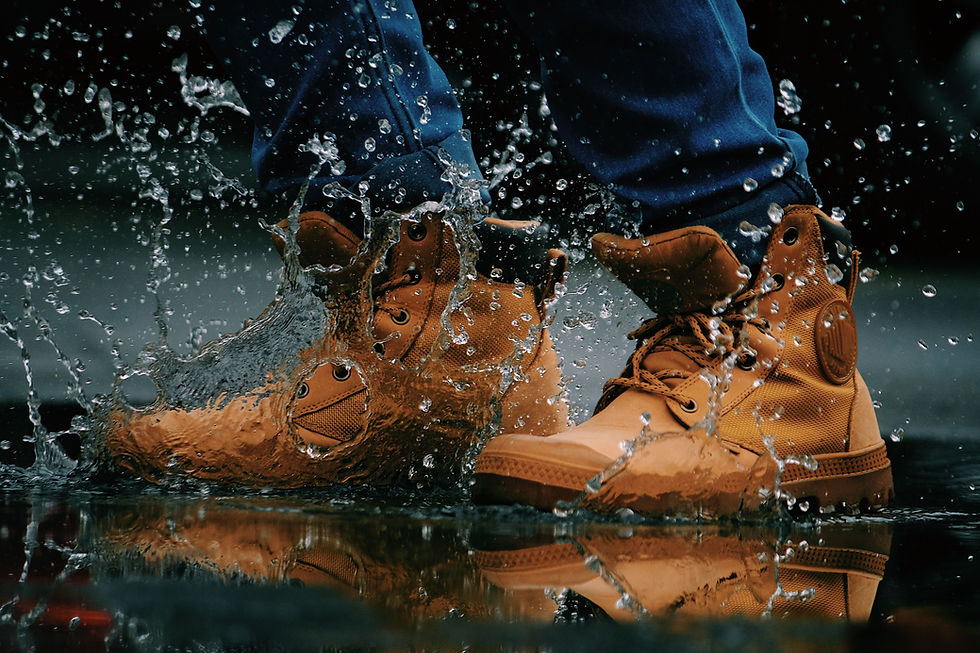
What water-resistant actually protects against
Water-resistant leather or textile can be useful for everyday wear. It is usually lighter and may feel more flexible than a boot with a substantial membrane or rubber shell. For a short walk in light rain, a treated leather boot can be entirely reasonable. The mistake is assuming that the word means the boot will remain dry after hours of exposure or repeated contact with wet snow.
A durable water-repellent finish works at the surface: water beads and rolls away instead of immediately soaking into the material. That finish can wear down with abrasion, dirt, salt and repeated flexing. Reapplying a compatible treatment may restore some surface repellency, but it does not turn an unlined boot into a waterproof boot. If the product listing does not describe a membrane or waterproof construction, treat the claim conservatively.
Choose by your route, not by the weather app
City errands and short walks in light rain
For brief exposure, a water-resistant leather boot can be enough if you maintain the upper and avoid deep puddles. It may be easier to wear with everyday clothes and can be more breathable than a fully waterproof style. Check the outsole for wet-surface grip, because a dry sock does not help if the sole slides on a polished sidewalk.
Wet commutes, slush and repeated puddles
If you walk several blocks in sustained rain or cross slushy streets every day, look for a named waterproof membrane or a rubber shell, plus a gusseted tongue and a shaft that sits high enough for the conditions. A water-resistant finish alone is a weaker choice for this routine. For brand-specific rainy-weather comparisons, see Blundstone vs Dr. Martens Chelsea boots for rain and Dr. Martens for a wet commute.
Cold weather and snow
Snow adds a second requirement: warmth. Waterproofing and insulation are separate features. A waterproof boot can be uninsulated and cold; an insulated boot can be warm but still leak if its construction is not waterproof. Check the lining, insulation description, shaft height and tread separately. If your main concern is cold rather than rain, compare the construction of winter styles such as Sorel Joan of Arctic vs UGG Adirondack instead of relying on one waterproof label.
How to read a boot listing in about a minute
Look for a named waterproof membrane or a clearly described rubber-shell construction; water-resistant leather alone is not the same claim.
Check whether seams are sealed and whether the tongue is gusseted, especially on lace-up boots.
Confirm the shaft height against the puddles, snow and slush you expect to encounter.
Read the outsole description and look for traction suited to wet pavement or slippery surfaces.
Treat insulation as a separate specification from waterproofing; one does not imply the other.
Check the care instructions for the exact upper material before buying sprays, waxes or conditioners.
Maintenance can restore repellency, but it cannot create a membrane
Leather needs appropriate care even when a boot has a waterproof liner. Danner explains that its waterproofing gel adds water repellency to full-grain leather and that repeated soaking and drying can damage leather fibers. The same guidance warns against using that gel on nubuck, suede or rough-out leather. This is a useful reminder that waterproofing products are material-specific; one universal spray is not right for every boot.
Clean off dirt and road salt before they dry into the upper, allow wet boots to dry at room temperature and follow the maker's instructions for reproofing. Avoid direct heat from a radiator or hair dryer. If the outer leather becomes wet while the membrane is still functioning, that does not necessarily mean the boot has leaked. The important question is whether water reached the inside lining and sock.
If you own several leather pairs, store them properly between wet seasons. Our guide to storing leather boots in summer covers keeping leather in good condition, while cleaning suede loafers without flattening the nap explains why suede needs a different approach from smooth full-grain leather.
Common buying mistakes
Assuming a waterproof boot can be submerged
Most everyday waterproof boots are not designed for immersion above the collar. Water can enter through the opening even if the membrane is intact. Choose a taller rubber boot or footwear designed for the depth of water you will encounter if standing water is part of your routine.
Confusing a wet outer surface with a failed membrane
Leather and textile uppers can darken or become saturated on the outside while a waterproof liner continues to protect the foot. That can affect drying time and comfort, but it is not automatically proof that the membrane has failed. Check the inside and the product's care guidance before replacing the boots.
Using the wrong waterproofing product
A wax or spray may be suitable for one leather finish and harmful or ineffective on another. Read the boot maker's instructions, especially for suede, nubuck, coated fabrics and membrane-lined footwear. Surface treatments can help maintain repellency; they cannot repair a torn membrane or a failed seam.
Waterproof vs water-resistant boots FAQ
Are leather boots waterproof?
Not automatically. Some treated full-grain leather sheds light moisture, but that is usually water resistance. A leather boot becomes waterproof through its construction, such as a waterproof membrane or a sealed rubber shell. Read the exact product specifications.
Can waterproof boots still get wet on the outside?
Yes. The outer leather or textile can absorb water while the inner membrane continues to keep liquid water away from the foot. The outer surface may take longer to dry, so follow the brand's cleaning and care instructions.
Does waterproofing spray make boots waterproof?
No. A compatible treatment can improve surface water repellency, but it does not add a waterproof membrane or seal every seam. It is maintenance for the upper, not a substitute for waterproof construction.
Are waterproof boots less breathable?
They can be, but the result depends on the membrane, lining, upper, temperature, activity and fit. A breathable membrane is designed to let some water vapor escape, but no boot can prevent every sweaty or damp feeling during hard activity.
Technical references and photo credits
GORE-TEX: How footwear construction works — explanation of membrane protection and moisture-vapor movement.
Danner Waterproofing Gel — manufacturer guidance on full-grain leather treatment and material restrictions.
Danner Explorer with GORE-TEX — an example of a boot listing that names a waterproof membrane and construction details.
Pexels License — cover photo by Lucas Andreatta (photo 13347812); in-article photo by Charles Miguel Dela Vega (photo 14433788). Both are free-use Pexels images and are illustrative, not specific product endorsements.


Comments