Real vs Faux Shearling Jackets: Warmth, Fit and Care Explained

A shearling jacket is often recognized by its plush collar, warm lining and leather-like outer surface, but the term is used loosely in product descriptions. Genuine shearling and faux shearling can look similar in a photograph while behaving very differently in use. The distinction affects weight, warmth, price, care and the information you should expect from a seller.
The most useful starting point is construction. Genuine shearling is a sheepskin or lambskin tanned with the wool still attached. Faux shearling is a textile pile made to imitate that look, often using synthetic fibers. Neither label tells you everything about quality, so compare the actual composition, finish and construction before deciding.
The material difference is in the backing
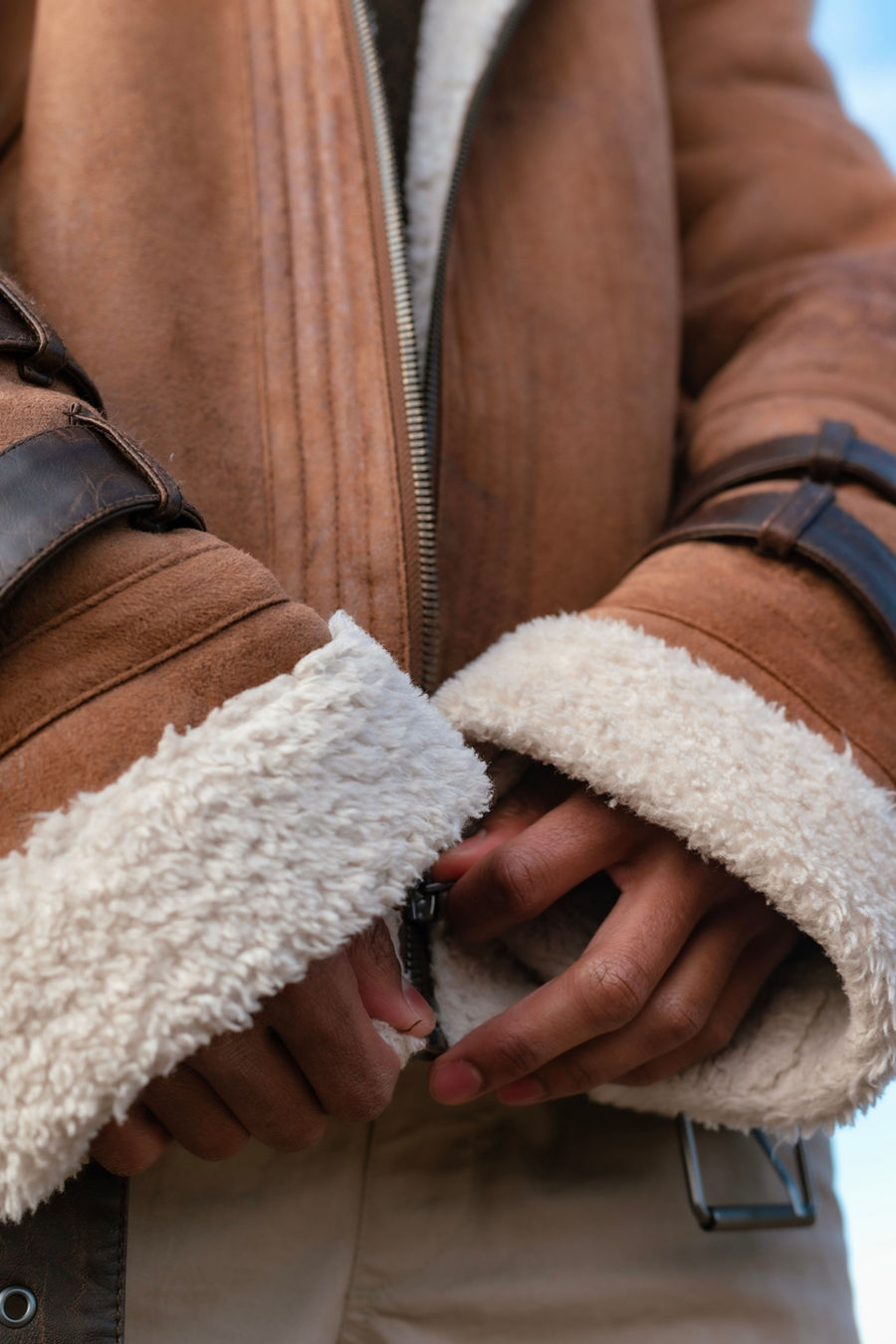
Real shearling is one hide with two usable sides: the leather or suede side faces outward, while the wool side is worn against the body or shown at the collar and cuffs. The wool is not simply a separate lining sewn into a leather jacket. Yves Salomon's material guide describes genuine shearling as lambskin naturally lined with its fleece, with the hide treated while the wool remains attached.
Faux shearling is usually a fabric pile bonded or sewn to a textile backing, or used as a lining inside a jacket made from another material. The fiber content may include polyester, acrylic or a blend. Some products use the word sherpa or shearling-look instead of faux shearling. Those terms can describe a texture, not a guarantee of natural sheepskin.
What genuine shearling does well
The wool fibers create insulating air pockets, while the hide provides a durable outer structure. Depending on the density and finish, genuine shearling can feel warm without requiring a separate bulky lining. It can also allow moisture vapor to move through the natural fibers, although the exact comfort depends on the garment's thickness, cut and how it is worn.
The trade-offs are price, weight and care. A genuine shearling jacket can be substantially heavier than a synthetic alternative, and the leather side may need specialist attention if it becomes stained or saturated. Schott's sheepskin aviator jackets illustrate the material's traditional construction: the product specifications identify premium sheepskin, heavyweight leather and a fleece lining as part of the same garment.
Where faux shearling can be the more practical choice
Faux shearling is often less expensive and may be lighter, which can make it easier to wear for short trips or in a milder climate. It also avoids animal-derived sheepskin, which matters to shoppers who prefer a non-animal material. Some synthetic versions are easier to spot-clean or wash, but care varies widely by backing, adhesive and outer fabric. Always check the label rather than assuming that every faux jacket is machine washable.
Synthetic pile can mat, flatten or shed with repeated friction, particularly around cuffs, underarms and the sides of a bag strap. A thick faux lining may feel warm at first but can trap heat differently from natural wool. The quality of the face fabric and the way the pile is attached matter as much as the softness you feel in a shop.
How to inspect a shearling jacket before buying
Read the fiber and material label. Genuine shearling should identify sheepskin or lambskin; faux versions should disclose the textile fibers used.
Ask for a close-up of the backing if the product page is vague. Real shearling has wool attached to a hide, while faux pile normally has a textile backing.
Check the seams, pocket edges and collar. Look for consistent construction and clean attachment rather than loose fibers or visible glue.
Lift the jacket and compare its weight with the amount of warmth and coverage you need. A heavier jacket is not automatically a better jacket.
Check whether the brand offers specialist cleaning or repair. Genuine shearling needs different care from ordinary fabric outerwear.
Review the return policy and product details if buying online; a styled photograph is not enough to confirm the material.
Choose a silhouette that suits the way you dress
The aviator or B-3 shape
An aviator jacket usually has a strong collar, visible buckle or throat latch details and a cropped-to-hip length. It works well with straight denim, sturdy trousers and boots because the jacket already has a substantial upper body. Keep the layer underneath relatively simple so the collar and fleece trim remain the focus.
The cropped shearling jacket
A shorter cut can be easier to balance with high-rise trousers or a long skirt. Check that the hem does not stop at an awkward point on the torso and that the sleeves allow a knit underneath. If the jacket is very thick, avoid adding several bulky layers below it.
A shearling-collar jacket
Some leather or denim jackets have only a shearling collar or detachable fleece trim rather than a full shearling body. This can provide the visual effect with less weight and a different price point. Read the product description carefully: a genuine sheepskin collar does not mean the entire jacket is made from shearling.
For related outerwear comparisons, see faux-fur coat outfit ideas and how to style a suede jacket; both use different surface textures and care considerations from genuine shearling.
Care rules change with the material
For genuine shearling
Do not put genuine shearling in a washing machine or tumble dryer. If it gets lightly wet, shake off excess water, blot carefully and let it dry in a ventilated place away from radiators, heaters and direct sun. Avoid rubbing wet suede. The American Fur Council's shearling guidance recommends specialist cleaning for the garment because aggressive home methods can damage the hide or wool.
Store the jacket on a broad hanger with room around it, away from direct heat and light. If the wool becomes flattened, ask a specialist about the correct way to restore the pile rather than applying household cleaners or strong brushes. For the leather side, a professional who understands sheepskin is safer than a general fabric dry cleaner.
For faux shearling
Follow the care label for the exact fiber and backing. Some faux-shearling garments can be washed on a gentle cycle, while others may be spot-clean only. Avoid high heat because synthetic pile can flatten or become damaged. Let the garment dry fully before storing it, and brush only as gently as the manufacturer permits.
Is real shearling worth the higher price?
It can be worthwhile if you want a long-term natural-material garment, appreciate the leather-and-wool construction and are prepared for specialist care. It may not be the right choice if you prefer animal-free materials, need a lighter jacket or do not want the cost of professional maintenance. Faux shearling can be a sensible option when the fiber content is clearly disclosed and the garment is well made.
Think about cost per wear, repair options, climate and personal material preferences rather than assuming one category is universally superior. A well-constructed faux jacket can be a better purchase for one person, while a carefully maintained genuine shearling piece may serve another for many winters. The best decision is the one whose care requirements you will actually follow.
Real vs faux shearling: quick answers
Is shearling the same as sherpa?
Not necessarily. Genuine shearling is wool attached to a tanned sheepskin. Sherpa usually describes a fleece-like textile surface, often synthetic, although product labels should always be checked.
Is real shearling warmer than faux shearling?
Not in every comparison. Genuine shearling has natural insulating wool, but warmth also depends on density, thickness, fit and wind protection. A thick synthetic jacket can be warmer than a lightweight genuine one.
Can you wash a shearling jacket at home?
Do not machine wash or tumble dry genuine shearling. Use a specialist for deep cleaning. For faux shearling, follow the specific care label; some pieces permit gentle washing and others do not.
Material references and photo credits
Material and care references: Yves Salomon's shearling guide, Schott NYC's sheepskin jacket specifications and the American Fur Council's shearling care guidance informed the material and care explanations.
Cover photograph: Bruna Fossile, Pexels source image; in-body lining detail: PNW Production, Pexels source image. Both are used under the Pexels License; source URLs and photographer labels are recorded in Wix Media Manager.


Comments